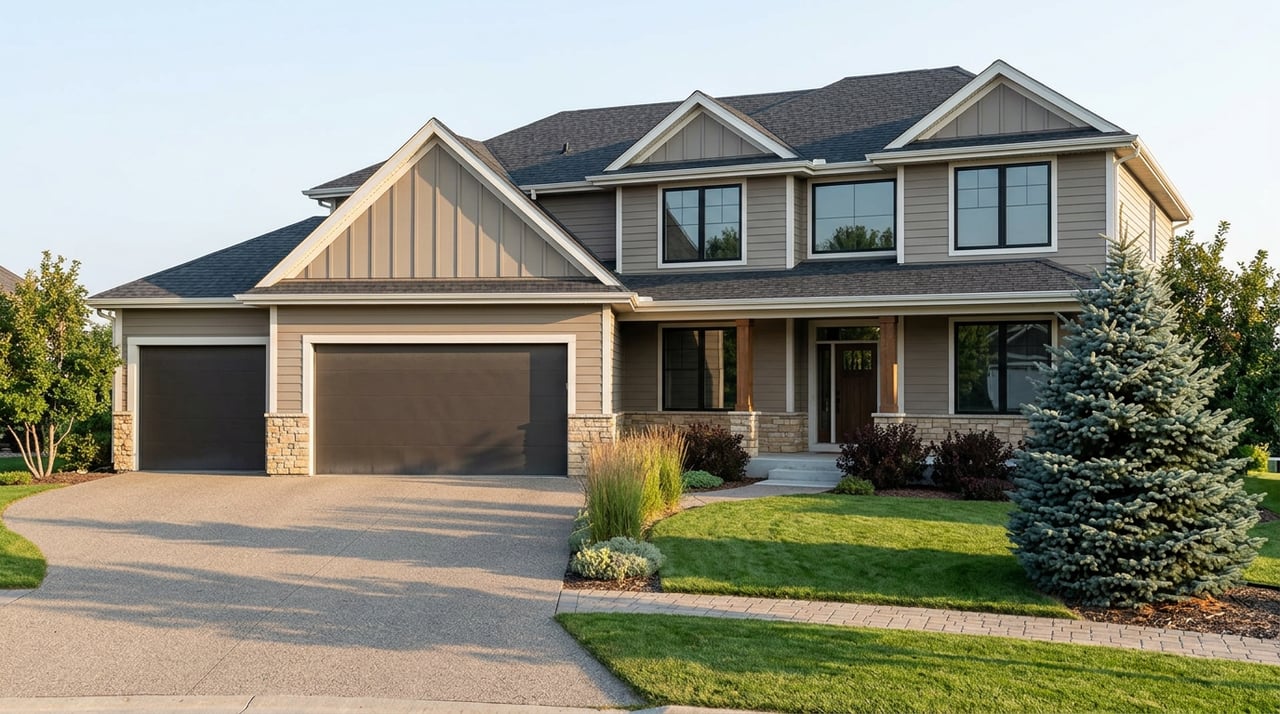
The Colorado Springs Homes Getting Stuck Aren't the Cheap Ones or the Expensive Ones
September 17, 2026
September 17, 2026
Two houses, same neighborhood, same price range, listed within days of each other this August. One still had its original kitchen cabinets. The other had been fully remodeled and priced a notch below what the seller could have asked. Andrea Warner, board president of the Pikes Peak Association of REALTORS, watched both hit the market and watched what happened next. The remodeled house had an offer by the next morning. The other one is still sitting.
That gap is the story underneath every "Colorado Springs is cooling" headline this fall. The market isn't slowing down evenly. It's splitting, and the split runs by price and by presentation, not just by season.
August's regional numbers, which Warner shared with KOAA this month, read like a textbook slowdown: active listings across the Pikes Peak region climbed to 3,218, up 7% from a year earlier, while 812 homes sold, down 5%. The average sale price landed at $560,915, and homes took an average of 46 days to sell, up from 40 days in August 2025. Taken at face value, that's a market handing buyers the upper hand.
Warner pushed back on that read.
"When you see a full-blown buyer's market, you will see a drastic drop in our sale prices and high inventory, and you're not really seeing that."
Prices softened. They didn't collapse. Inventory grew. It didn't flood the market. What actually happened, based on the price breakdown Warner shared, is that El Paso County's roughly 3,221 active single-family and patio listings split into three groups that behave nothing alike.
| Price band | Active listings | How it's moving |
|---|---|---|
| Under $400,000 | 646 | Fast, helped by specialized financing programs |
| $401,000 to $600,000 | 1,411 | Still selling, but slower than either edge |
| $900,000 and up | 406 | Fast, driven by cash buyers |
That middle band is nearly as large as the other two combined, and it's the one taking longest to close. "The houses are still moving right in that price range, but they're taking longer to sell than the very low and the very high," Warner said. Her explanation was financing. Buyers under $400,000 often qualify for first-time buyer assistance and specialized loan programs that keep a sale moving. Buyers above $900,000 are more likely paying cash. Everything between $401,000 and $600,000 gets neither advantage. It's priced past most assistance programs and still runs on a conventional mortgage timeline while the homes on either side of it move faster.
Briargate is a useful test case because it sits almost entirely inside that band. In August 2026, homes there listed at a median price of $499,000, down slightly from the month before and down about 4% from a year earlier. Median days on market landed at 50, essentially flat compared to August 2025. Nothing about that is a crash. It's a neighborhood behaving exactly the way Warner described the middle band behaving: prices holding close to flat, days on market inching up, nothing moving with urgency in either direction.
Other reporting on the same stretch of August backs up the shape of the pattern, if not the exact numbers. Sales across the broader Pikes Peak MLS region were down roughly 6% from a year earlier and the average sale price dipped about 3%, but the more telling detail was how unevenly homes performed within that average. Well-priced, well-presented listings were going under contract in under ten days, while a meaningful share of listings sat 75 days or longer. That's the same split Warner described, just measured from a different angle. A citywide average of 46 days on market isn't describing one market. It's averaging two.
If your home falls in that band, the two-house story is the operating manual. Warner also pointed to another listing that sat for more than 160 days after going on the market at $460,000, a price that wasn't unreasonable on paper but didn't hold up against what buyers were comparing it to. Meanwhile the remodeled home a few streets over got an offer within a day, priced a step below what it might have commanded a year ago.
A few things follow from that:
None of that means the middle of the market is dead. Warner was clear that homes in this range are still selling, just more slowly and with more negotiation attached than sellers priced in a year or two ago.
The same split works in your favor if you're patient. You're shopping the segment with the most inventory, 1,411 active listings countywide by Warner's August count, which means more room to compare, more leverage on concessions, and less pressure to waive contingencies just to compete.
Warner's other point worth carrying into a search: don't assume 20% down is the price of entry. She specifically flagged that buyers in this range sometimes rule out homes based on financing assumptions that no longer match what's available. A conversation about financing options before you start touring is worth having early, not after you've fallen for a house at the edge of what you thought was your range.
Warner expects the pattern to hold rather than shift dramatically. "I think that you're still going to see a steady, just a little decline," she said, adding she doesn't expect any major jumps until next year. That's not a forecast built on drama. It's a market that has settled into a shape, and the shape runs at three different speeds depending on where a home sits on the price scale.
For anyone comparing neighborhoods like Briargate, Wolf Ranch, or Meridian Ranch against each other on price alone, that shape matters more than the neighborhood name. Two homes a mile apart can behave completely differently once you know which side of $600,000 they're on.
Does a slower middle market mean prices are dropping fast? Not based on what Warner described. The average sale price in August was $560,915, softer than earlier in the year but not the kind of drop that defines a full buyer's market. Slower days on market and modest price softening are two separate signals, and right now they're not moving together.
Is every $400K to $600K neighborhood affected the same way? The mechanism, financing access at the edges versus the middle, applies broadly across the region, but individual neighborhoods still vary by current inventory levels and how many comparable sales buyers have to weigh a listing against. Briargate's August numbers track the regional pattern closely. That won't hold true street by street everywhere.
Should I wait for spring if I'm selling in this range? Warner's own outlook was for a steady, modest decline rather than a rebound, which argues against banking on a spring turnaround to fix pricing on its own. Presentation and pricing strategy right now are doing more to determine outcome than timing is.
If you're weighing a move in that stuck middle, whether you're selling a home in Meridian Ranch or trying to figure out what $500,000 actually buys across Briargate, Wolf Ranch, and the rest of the northern Colorado Springs corridor, the numbers above are the starting point, not the whole conversation. Sheena Crompton works this exact price band across Monument and the northern Front Range every week and can walk you through what it means for your specific address. Get Your Instant Home Valuation to see where your home actually lines up.
Stay up to date on the latest real estate trends.